To estimate shipping weight for items from a CNfans spreadsheet, sum the average weights of your individual items (e.g., a T-shirt is ~250g, a hoodie is ~900g, sneakers are ~1200g) and add a buffer of 500g-1000g for the shipping box and packaging materials. This total estimated weight can then be used in your shipping agent's calculator for a cost projection.
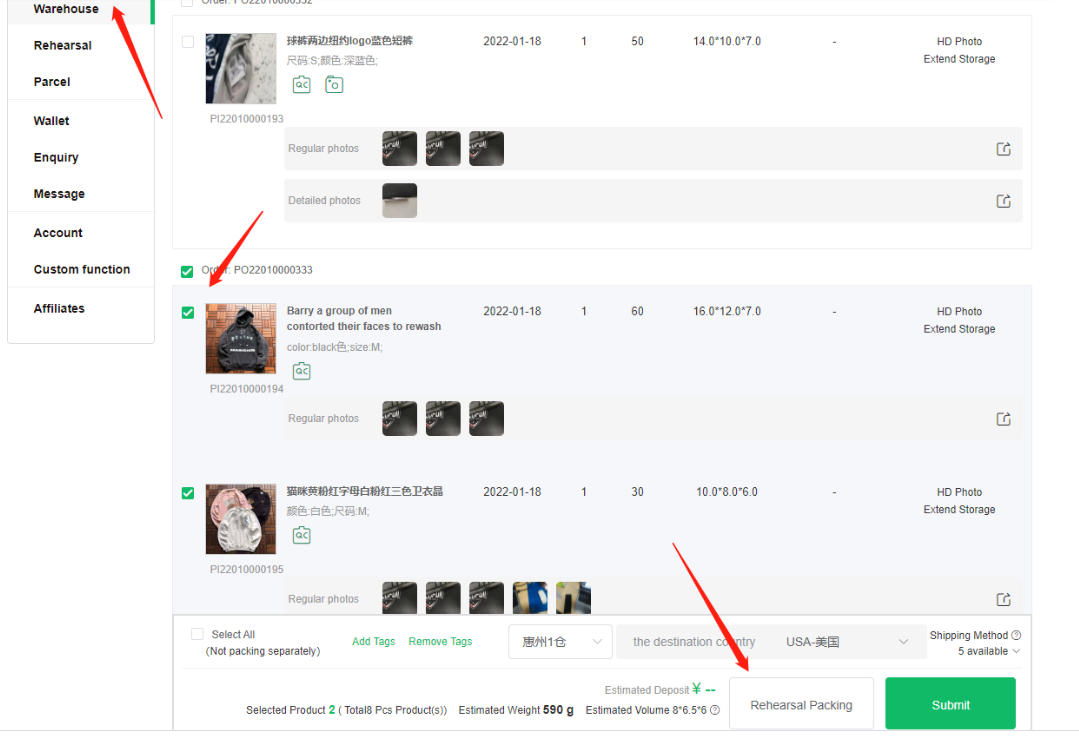
Table of Contents
- Why is Estimating Shipping Weight So Important?
- What's the Difference Between Item Weight, Parcel Weight, and Volumetric Weight?
- How Can I Find the Weight of Specific Items from a CNfans Spreadsheet?
- A Practical Tool: The Average Item Weight Reference Table
- How Much Weight Does Packaging Add to a Parcel?
- Which Smart Strategies Can Help Reduce Final Shipping Costs?
- What Are Common Mistakes to Avoid When Estimating Weight?
- Putting It All Together: A Step-by-Step Estimation Example
Why is Estimating Shipping Weight So Important?
Understanding the potential weight of your order is fundamental to managing your budget effectively. When you purchase items through an agent, the process involves two major payments: the first for the items themselves and the second for international shipping. The shipping cost is almost entirely dependent on your parcel's final weight and dimensions. A precise weight estimate prevents the shock of an unexpectedly high shipping bill, allowing you to budget accordingly from the moment you start browsing.
Furthermore, different shipping lines have varying price structures and weight limits. Knowing your estimated parcel weight helps you determine which shipping options will be available and most cost-effective for your specific order. For instance, some lines are cheaper for smaller parcels under 2kg, while others offer better value for heavier hauls. An accurate estimate empowers you to make informed decisions long before your items even arrive at the warehouse.
What's the Difference Between Item Weight, Parcel Weight, and Volumetric Weight?
Navigating international shipping requires understanding the key terms that logistics companies use. The weight you see on a product page and the weight you are billed for can be different. Mastering these concepts is crucial for a precise estimate.
Item Weight: The Starting Point
Item weight refers to the weight of a single product on its own, without any external packaging. This is the weight of the T-shirt, the pair of jeans, or the sneakers themselves. While this figure is your starting point, it is never the final weight you'll pay for. Think of it as the base number upon which all other calculations are built. It's useful for comparing products, but it is only one piece of the puzzle.
Parcel Weight: The Final Billable Figure
Parcel weight, also known as actual weight, is the total weight of your entire package as it sits on the scale. This includes all your items *plus* the weight of the shipping box, protective materials like bubble wrap, tape, and any promotional materials or invoices included by the agent. This is the figure most commonly used to calculate shipping fees, especially for dense, heavy packages. A common and safe practice is to add a significant buffer to your total item weight to account for packaging.
Volumetric (or Dimensional) Weight: The Space It Takes Up
Volumetric weight is a calculation that considers the amount of space a package occupies. Shipping carriers use it to charge for bulky, lightweight items that take up a lot of room in a plane or truck. The formula is typically (Length x Width x Height) / Divisor, with the divisor (like 5000 or 6000) set by the shipping company. You are billed for whichever is higher: the parcel weight or the volumetric weight. This is especially relevant for items like puffer jackets, hats, or multiple pairs of shoes shipped in their boxes, which may not be heavy but are very bulky.
How Can I Find the Weight of Specific Items from a CNfans Spreadsheet?
Once you've found an item you love on a CNfans spreadsheet, the next step is to determine its potential weight. Since you can't physically hold the item, you need to use available data and community knowledge to form a solid estimate.
Using Average Weight Estimation Tables
The most reliable and straightforward method is to consult a reference table of average item weights. These tables are compiled from thousands of past orders and provide a realistic weight range for common clothing and accessory types. A good table will differentiate between light summer items and heavy winter ones, giving you a strong baseline for your calculations. Our detailed table below is designed for this exact purpose.
Checking Past QC Photos
Many purchasing agents provide a valuable service where they photograph your items upon arrival at their warehouse. These Quality Control (QC) photos often include an image of the item on a scale, showing its precise weight. If you can find QC photos for the *exact* item you want to buy (or a very similar one), you can get a highly accurate item weight. This involves searching for the item link or name on agent websites or community forums.
Looking at Community Haul Reviews
Online communities, particularly on platforms like Reddit, are treasure troves of information. Users frequently post detailed reviews of their "hauls," often including a breakdown of each item's weight, the total parcel weight, the shipping line used, and the final cost. Searching these communities for reviews of similar items can provide real-world data to refine your estimates.
A Practical Tool: The Average Item Weight Reference Table
Use this table as your primary resource for estimating the weight of your items. Weights are listed in grams (1000g = 1kg) and represent typical averages. Remember that material (e.g., heavy cotton vs. polyester) and size will cause variations.
| Item Category | Item Type | Estimated Average Weight (grams) | Notes |
|---|---|---|---|
| Tops | T-Shirt | 200g - 350g | Heavier, oversized fits are on the high end. |
| Long Sleeve Shirt | 300g - 500g | Dependent on material thickness. | |
| Polo Shirt | 250g - 400g | Similar to T-shirts but can be heavier. | |
| Outerwear | Hoodie | 700g - 1200g | Very heavy fleece hoodies can exceed 1200g. |
| Sweatshirt / Crewneck | 600g - 900g | Generally lighter than hoodies. | |
| Jacket (Denim/Windbreaker) | 800g - 1500g | Puffer jackets are light but have high volumetric weight. | |
| Bottoms | Jeans / Denim | 700g - 1000g | Heavy denim or baggy styles are heavier. |
| Sweatpants / Joggers | 500g - 800g | Fleece-lined joggers will be on the heavier side. | |
| Shorts | 250g - 500g | Cargo shorts are heavier than athletic shorts. | |
| Footwear | Sneakers / Trainers | 800g - 1500g | Weight is without the box. Add ~300g for the box. |
| Slides / Sandals | 400g - 700g | Usually much lighter than sneakers. | |
| Accessories | Hat / Beanie | 100g - 200g | Light but can add to parcel dimensions. |
| Belt | 200g - 400g | Leather belts with heavy buckles are heavier. | |
| Socks (pair) | 50g - 100g | Thicker socks weigh more. |
How Much Weight Does Packaging Add to a Parcel?
Forgetting to account for the weight of the shipping box is one of the most common estimation errors. Packaging is not weightless; a sturdy cardboard box, tape, and protective wrapping add a substantial amount to your parcel's final weight. This additional weight is absolutely critical for an accurate cost projection.
As a rule of thumb, you should add a buffer for packaging. For a small order with just a few T-shirts, adding 500g is a safe minimum. For a medium-sized haul containing a hoodie and a pair of pants, a buffer of 700g-1000g is more realistic. For large hauls, especially those containing multiple pairs of shoes with their boxes, the packaging weight can easily exceed 1200g. Always err on the side of caution and add more weight to your estimate for packaging than you think you need.
Which Smart Strategies Can Help Reduce Final Shipping Costs?
Beyond estimation, there are proactive steps you can take to lower the billable weight and, consequently, your shipping expenses. These services are typically offered by your agent before the parcel is dispatched.
Rehearsal Shipping
Rehearsal shipping is a service where you pay a small fee for the agent to pre-pack your entire order, weigh it, and measure its exact dimensions. This removes all guesswork. You receive the precise weight and volume, allowing you to choose the perfect shipping line and pay the exact amount required. This is highly recommended for large hauls or for anyone wanting maximum cost certainty.
Removing Packaging
One of the easiest ways to reduce both actual and volumetric weight is to ask your agent to discard unnecessary packaging. The most common request is to remove shoeboxes, which are both heavy and bulky. You can also ask them to remove product tags, plastic wrapping, and any other non-essential packaging. This simple instruction can significantly decrease your parcel's final billable weight.
Choosing the Right Shipping Line
Once you have an accurate weight from your estimate or a rehearsal, you can strategically select a shipping line. Some carriers offer "tax-free" triangular shipping routes that are excellent for certain countries, while others might be cheaper but slower. Some lines are optimized for small parcels, while others, like EMS, are often more economical for very heavy parcels. Use your agent's shipping calculator to compare the options available for your specific weight and destination.
What Are Common Mistakes to Avoid When Estimating Weight?
Even with the right tools, small oversights can lead to inaccurate estimates. Being aware of these common pitfalls will help you refine your process and avoid unwelcome financial surprises.
The most frequent error is forgetting the packaging buffer. The sum of your item weights is not the final weight. Always add at least 500g-1000g to your total. Another mistake is ignoring volumetric weight. If you are ordering a puffer jacket, multiple hats, or shoes in their boxes, your parcel will be billed based on its size, not its weight. If your haul is bulky, anticipate that volumetric weight will apply.
Finally, remember that all pre-calculation is an *estimate*. Material density, factory variations, and agent packaging practices can all influence the final number. Use your estimate for budgeting and planning, but allow for a small margin of error. Do not treat your estimated figure as a guaranteed, final cost until you get the definitive data from your agent.
Putting It All Together: A Step-by-Step Estimation Example
Let's walk through a real-world scenario. Imagine you are browsing a CNfans spreadsheet and decide to build a haul consisting of one hoodie, one T-shirt, and one pair of sneakers.
Step 1: Find the Average Item Weights.
Using the reference table above, you find the average weights:
- Hoodie: 900g
- T-Shirt: 250g
- Sneakers (no box): 1200g
Step 2: Sum the Total Item Weight.
Add the weights of all your items together.
900g + 250g + 1200g = 2350g
Step 3: Add the Packaging Buffer.
For a haul of this size, which includes a bulky hoodie and shoes, a packaging buffer of 850g is a safe bet.
2350g + 850g = 3200g
Step 4: Convert to Kilograms for the Shipping Calculator.
Your final estimated parcel weight is 3200g, or 3.2kg. You can now take this 3.2kg figure to your agent's shipping estimation tool, enter your destination country, and get a reliable cost projection across various shipping lines.