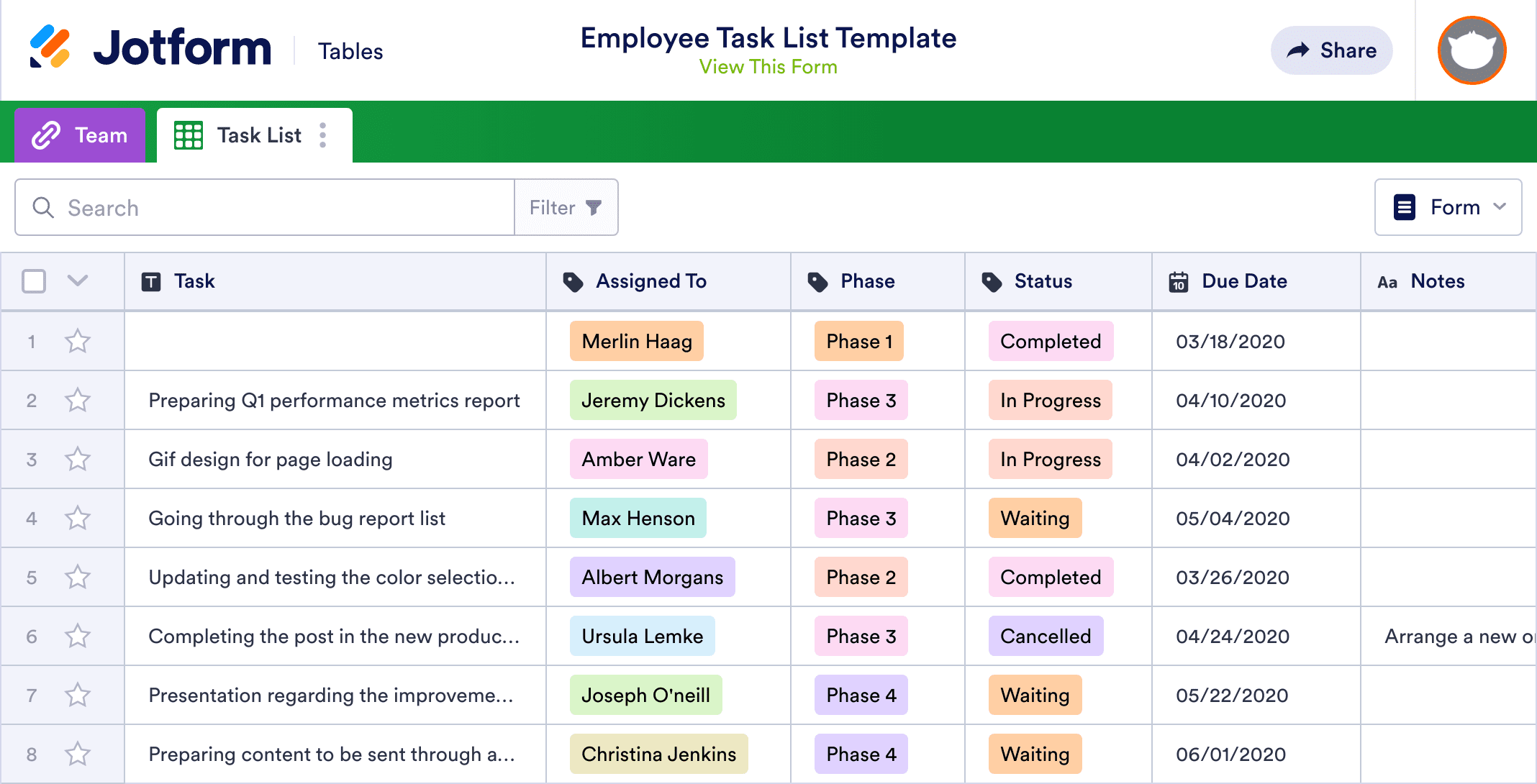
A workplace task assignment table is a central tool for organizing, delegating, and tracking work within a team. It typically includes columns for task descriptions, assignees, due dates, priority levels, and status. The primary benefit is creating a single source of truth, which enhances accountability, improves workflow transparency, and helps prevent missed deadlines. The Cnfans spreadsheet 2025 Workplace Task Assignment Table elevates this concept with dynamic dashboards and advanced resource management features.

Table of Contents
- What Defines an Effective Workplace Task Assignment Table?
- Foundational Elements of a High-Performing Task Tracker
- Why Traditional Task Lists Fail in Modern Workplaces
- Introducing the Cnfans Spreadsheet 2025: A Paradigm Shift in Task Management
- How to Implement the Task Assignment Table for Maximum Impact
- Key Features that Set the Cnfans 2025 Spreadsheet Apart
- Who Benefits Most from This Advanced Task Management Tool?
- Avoiding Common Pitfalls in Task Delegation
- Is a Spreadsheet Still Relevant for Task Management in 2025?
- Preparing Your Team for Success with the Cnfans Assignment Table
What Defines an Effective Workplace Task Assignment Table?
An effective task assignment table transcends a simple to-do list; it functions as a dynamic command center for a team's operations. Its primary purpose is to instill a culture of clarity, accountability, and transparency. Clarity means every team member knows exactly what they are responsible for, when it is due, and how it fits into the larger project. There should be no ambiguity about ownership or expectations.
Accountability is a direct result of this clarity. When tasks are publicly assigned and tracked, individuals naturally take greater ownership of their work. A well-structured table makes progress visible, highlighting both achievements and roadblocks. This transparency ensures that everyone, from team members to managers, has a real-time view of the project's health. It breaks down silos and fosters a collaborative environment where team members can see how their work impacts others.
Foundational Elements of a High-Performing Task Tracker
The architecture of your task assignment table is critical to its success. While simple lists can suffice for personal chores, professional team management requires a more robust structure. The components can be divided into essential fields for basic tracking and advanced fields for strategic oversight.
Essential Columns for Absolute Clarity
Every functional task tracker must contain a core set of data points to eliminate confusion and ensure smooth workflow. These are the non-negotiable elements that form the backbone of any assignment sheet.
| Column Name | Description |
|---|---|
| Task ID | A unique identifier for each task, preventing confusion and simplifying referencing in communications. |
| Task Description | A clear and concise summary of what needs to be done. It should be specific enough to be actionable without further explanation. |
| Assignee | The name of the person responsible for completing the task. There should only be one assignee to ensure clear ownership. |
| Due Date | The specific date by which the task must be completed. This is crucial for time management and project scheduling. |
| Priority | A rating of the task's urgency and importance (e.g., High, Medium, Low). This helps individuals prioritize their workload. |
| Status | The current state of the task (e.g., Not Started, In Progress, Blocked, Completed). This provides an at-a-glance view of progress. |
| Notes | A field for additional context, questions, or links to relevant documents. |
Advanced Fields for Strategic Management
To move from simple tracking to strategic management, advanced fields are necessary. These elements provide deeper insights into project performance, resource allocation, and efficiency. The Cnfans spreadsheet 2025 template is designed with these strategic components built-in, offering managers a more powerful tool for analysis. These fields often include Estimated vs. Actual Hours to refine future planning, Progress Percentage for granular tracking of larger tasks, and Dependencies to map out how tasks are interconnected, preventing bottlenecks before they occur.
Why Traditional Task Lists Fail in Modern Workplaces
Many teams still rely on static, disconnected task lists created in basic text documents or simple spreadsheets. While better than nothing, these traditional methods are ill-suited for the dynamic nature of modern work. Their primary failure is their static nature. Information quickly becomes outdated, and updating the list is a manual, cumbersome process that often falls on a single person.
Furthermore, these lists lack collaborative features. They don't provide real-time updates, making it difficult for team members to see the latest changes or comment directly on tasks. This leads to a constant back-and-forth through email or chat, creating communication overhead and fragmenting information. The inability to easily visualize data, such as workload distribution or project progress, means managers are often flying blind, unable to make proactive, data-driven decisions.
Introducing the Cnfans Spreadsheet 2025: A Paradigm Shift in Task Management
The Cnfans spreadsheet 2025 Workplace Task Assignment Table is engineered to overcome the limitations of traditional methods. It is not just a template; it is a comprehensive system designed for the future of work, accommodating agile workflows, remote teams, and the need for data-centric management. This professionally developed tool transforms a familiar spreadsheet interface into a powerful project management hub.
Built on years of expertise in productivity solutions, this spreadsheet incorporates features typically found only in expensive software. It features dynamic dashboards that automatically update, visual reporting for at-a-glance insights, and a user-friendly design that requires minimal training. By choosing a Cnfans template, you are investing in a refined tool that saves countless hours in setup and maintenance, allowing your team to focus on what truly matters: delivering high-quality work.
How to Implement the Task Assignment Table for Maximum Impact
Possessing a powerful tool is only the first step; successful implementation is what unlocks its true value. A structured rollout ensures team-wide adoption and transforms the spreadsheet into an indispensable part of your workflow.
Step 1: Customizing the Template to Your Team's Needs
Before introducing the spreadsheet to your team, tailor it to your specific projects and processes. This may involve adjusting or adding columns to capture unique data points relevant to your work. A crucial customization is defining the `Status` categories. While a basic set (e.g., Not Started, In Progress, Completed) is a good start, consider adding more nuanced statuses like Blocked, Pending Review, or On Hold to provide a clearer picture of the workflow.
Step 2: Establishing Clear Rules for Usage
For the tool to remain a single source of truth, everyone must use it consistently. Establish and communicate clear guidelines. Define who is responsible for creating tasks and who can update their status. A common best practice is for the task assignee to be solely responsible for updating the status and progress, while the manager oversees the overall sheet. Set a clear cadence for updates, such as requiring all statuses to be current by the end of each day or before a daily stand-up meeting.
Step 3: Integrating the Spreadsheet into Daily Workflows
The task assignment table should not be an afterthought. It must be woven into the fabric of your team's daily routines. Start every team meeting by reviewing the dashboard to discuss priorities and roadblocks. Link to the spreadsheet in project channels, meeting agendas, and status reports. When the tool becomes the central reference point for all discussions about work, its adoption becomes second nature, and its benefits are fully realized.
Key Features that Set the Cnfans 2025 Spreadsheet Apart
What elevates the Cnfans 2025 Workplace Task Assignment Table from a simple tracker to a management powerhouse are its integrated, intelligent features. These components are designed to provide clarity and save managers valuable time.
Dynamic Status Dashboards
Instead of manually counting tasks to gauge progress, the Cnfans spreadsheet includes a visual dashboard. This dashboard automatically generates charts—such as a pie chart showing the proportion of tasks in each status category or a bar chart displaying tasks per team member. This visual representation allows anyone to understand the project's health in seconds, without needing to scrutinize rows of data.
Automated Priority Matrix
Prioritization is often a subjective and time-consuming process. This advanced template incorporates an automated priority matrix, often based on the Eisenhower Matrix principle (Urgent vs. Important). By categorizing tasks along these two axes, the spreadsheet can automatically calculate and assign a priority level, helping the team focus on activities that deliver the most value and are most time-sensitive.
Resource and Workload Balancing View
A common management challenge is unknowingly overloading top performers while underutilizing others. The Cnfans spreadsheet addresses this with a dedicated workload balancing view. By visualizing the number of tasks or estimated hours assigned to each team member, managers can spot potential burnout risks and reallocate work more equitably. This fosters a healthier, more sustainable team environment.
Who Benefits Most from This Advanced Task Management Tool?
A well-designed task assignment system provides value across an entire organization, but certain roles will find a tool like the Cnfans spreadsheet 2025 version particularly indispensable. Project Managers can move from chasing updates to strategically guiding the project, using the dashboard to monitor health and the workload view to manage resources effectively. Team Leaders gain immediate clarity on what their team is working on, enabling them to provide better support, remove blockers, and report progress to upper management with confidence.
Small Business Owners, who often juggle multiple roles, can use the template to bring structure to their operations without investing in complex, costly software. It provides a professional-grade management system that scales with their business. Even Freelancers managing multiple clients and projects can benefit immensely, using the table to keep track of all their deliverables, deadlines, and priorities in one centralized location, ensuring nothing falls through the cracks.
Avoiding Common Pitfalls in Task Delegation
Effective task delegation is an art, and even with the best tools, common pitfalls can derail progress. One major issue is providing unclear instructions. The task description field in the spreadsheet should be used to define the "what" and "why" of the task, including acceptance criteria. Another pitfall is assigning a task and then failing to follow up. The spreadsheet mitigates this by making status and progress visible, prompting natural follow-up conversations when a task is stalled.
Using the spreadsheet as a tool for micromanagement is another danger. Its purpose is to empower employees with clarity and autonomy, not to scrutinize their every move. Managers should use the data to provide support and remove obstacles, not to question how time is spent. The tool's transparency should foster trust, reinforcing the idea that everyone is working towards the same goals.
Is a Spreadsheet Still Relevant for Task Management in 2025?
In an era of countless specialized software-as-a-service (SaaS) project management applications, some may question the relevance of a spreadsheet. However, the spreadsheet's enduring power lies in its unparalleled flexibility, accessibility, and familiarity. Nearly everyone knows how to use a spreadsheet, which dramatically lowers the barrier to entry and eliminates the need for extensive training.
Unlike rigid software, a spreadsheet is infinitely customizable to a team's unique workflow. The Cnfans 2025 template capitalizes on this by offering a "software-like" experience within the universally understood spreadsheet environment. It provides 90% of the functionality of expensive project management tools—like dashboards, automated reporting, and resource management—without the hefty price tag or steep learning curve. For a vast number of teams and projects, it represents the ideal balance of power and simplicity.
Preparing Your Team for Success with the Cnfans Assignment Table
A successful launch involves more than just sharing a link. It requires a thoughtful approach to onboarding that builds enthusiasm and ensures understanding. Start with a brief training session where you walk the team through the spreadsheet's structure and features. Frame the adoption not as a new administrative burden, but as a collective improvement that will make everyone's work life easier by reducing confusion and unnecessary communication.
Crucially, emphasize the benefits for each team member: fewer interruptions from managers asking for status updates, clear priorities to help manage their own time, and visibility into how their work contributes to the team's success. When the team sees the tool as something that helps them, rather than just helping management, adoption will be swift and enthusiastic. Encourage feedback in the initial weeks to make small adjustments, reinforcing that it is a shared tool for the entire team.