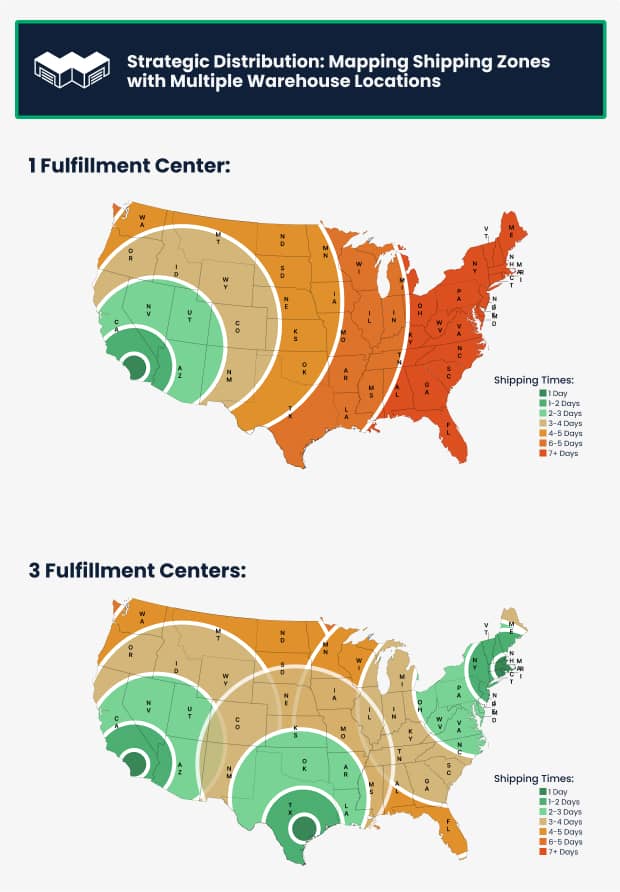
Shipping zones for products found on the CNfans spreadsheet are geographical areas defined by shipping agents, not CNfans itself. These zones group countries to determine international shipping prices and available courier services for your package (haul) from the agent's warehouse in China to your doorstep. Your location directly dictates the cost and speed of receiving your items.

Table of Contents
- What Exactly Are Shipping Zones in the Context of Your Haul?
- Why Do Shipping Zones Matter for Your CNfans Spreadsheet Finds?
- How Are Shipping Zones Determined by Agents?
- How Do I Find My Country's Shipping Zone?
- Which Shipping Lines Operate in Different Zones?
- What Is the Difference Between Actual Weight and Volumetric Weight?
- How Can I Estimate Shipping Costs for My Zone?
- Are There Restrictions Based on Shipping Zones and Lines?
- What Are Some Tips to Save on Shipping Costs?
- Frequently Asked Questions about Shipping Zones
What Exactly Are Shipping Zones in the Context of Your Haul?
When you discover items using the CNfans spreadsheet, you're finding direct links to products on Chinese platforms. After purchasing, these items are sent to a warehouse operated by a shipping agent (like Pandabuy, Sugargoo, Hagobuy, etc.). This agent is your logistics partner in China. A shipping zone is a classification system these agents use to group destination countries for international shipping.
Think of it as a pricing map. Instead of having a unique shipping price for every single country, agents group them into zones based on factors like distance and logistical complexity. For example, the United States and Canada might be in one zone, while Germany, France, and the UK might be in another. Your shipping cost is primarily determined by the zone your delivery address falls into. It's crucial to understand that CNfans curates the products, while your chosen agent manages the entire shipping process, including the definition of these zones.
Why Do Shipping Zones Matter for Your CNfans Spreadsheet Finds?
Understanding your shipping zone is fundamental to managing your budget and expectations. Once you've filled your warehouse with finds from the CNfans spreadsheet, the shipping zone directly impacts three critical aspects of your international parcel.
First and foremost is the cost. Shipping from China can sometimes cost as much as the items themselves, and the price varies dramatically between zones. A package sent to Southeast Asia will have a very different price tag than the exact same package sent to South America. Knowing your zone helps you anticipate this major expense. Second is the transit time. Different zones have varying levels of infrastructure and carrier presence, affecting how quickly your package arrives. Third, the zone influences the availability of shipping lines. Not all couriers (like DHL, EMS, or SAL) deliver to every country, so your zone dictates which options are even available to you.
How Are Shipping Zones Determined by Agents?
Shipping agents don't create zones arbitrarily. They are constructed based on the operational frameworks of their logistics partners—the international couriers. Key factors include geographical proximity to China, the volume of packages sent to a region, existing trade agreements, and the complexity of customs clearance in the destination country. Countries that are closer and have high shipping volumes and streamlined customs processes are often grouped into more favorably priced zones.
Common Zone Groupings
While every agent has a slightly different system, you will often see zones categorized in a similar fashion. Common groupings you might encounter on an agent's shipping calculator include:
- Southeast Asia: (e.g., Malaysia, Singapore, Thailand, Vietnam) - Often the cheapest and fastest zone due to proximity.
- North America: (e.g., USA, Canada, Mexico) - A high-volume region with many shipping line options.
- Western Europe: (e.g., Germany, UK, France, Italy, Spain) - Another major market with competitive shipping options, though some countries may have stricter customs.
- Oceania: (e.g., Australia, New Zealand) - A distinct zone due to its geographical isolation.
- Other Regions: This can include Eastern Europe, the Middle East, South America, and Africa, which may have fewer direct shipping lines and potentially higher costs.
How Do I Find My Country's Shipping Zone?
You don't need to guess. Every shipping agent provides a shipping calculator or estimator tool on their website. To find your zone and see your options, you simply need to input your destination country. The system will then automatically display all the available shipping lines for your specific region, along with estimated costs and transit times. This tool is your best friend for planning your shipment. Before committing to an agent, it's wise to use their calculator to compare how they service your specific country.
Which Shipping Lines Operate in Different Zones?
The shipping line you choose is just as important as the zone itself. A shipping line is the specific courier service that will transport your parcel. Your zone determines which of these lines you can use. For instance, some "tax-free" or "triangle" shipping lines are only available for specific European or North American zones because they rely on specific customs-clearing routes.
Conversely, economical lines like SAL might not be offered to zones where mail volume is low. It's a network of options. Your job is to select the best line available for your zone based on your priorities: speed, cost, or reliability.
Comparing Popular Shipping Lines
After finding your items on the CNfans spreadsheet, you'll need to choose a shipping line at your agent. Here is a general comparison of common options. Note: Availability and performance vary by agent and destination zone.
| Shipping Line | Typical Speed | Cost Level | Key Features & Common Zones |
|---|---|---|---|
| EMS (e.g., GD-EMS, KR-EMS) | Moderate (7-20 days) | Moderate-High | Good balance of speed and cost. Widely available, especially strong for North America (KR-EMS) and other regions (GD-EMS). |
| DHL/FedEx/UPS | Fast (3-7 days) | High | Express couriers. Very reliable with excellent tracking. Best for urgent or high-value items. Available in most major zones but are strict with branded goods. |
| SAL | Slow (30-90+ days) | Low | An economy option using sea and air transport. Very slow and tracking can be minimal. Good for heavy, non-urgent hauls. Availability is limited to certain zones. |
| Tax-Free/Triangle Lines | Moderate (10-25 days) | Moderate-High | Specialized lines for Europe and North America. The package is routed through another country for customs clearance to simplify the process. Often have volumetric weight calculations. |
What Is the Difference Between Actual Weight and Volumetric Weight?
This is one of the most important concepts to grasp for managing shipping costs. The price of your shipment is based on its chargeable weight, which is the greater of two measurements: actual weight and volumetric weight.
Actual weight is simply how heavy the package is when placed on a scale. It's straightforward and measured in grams (g) or kilograms (kg).
Volumetric weight (or dimensional weight) is a calculation that reflects the amount of space a package occupies. It is used for items that are large but lightweight, like shoes, empty boxes, or puffy jackets. Couriers use this because a large, light box still takes up significant space on a plane or truck that could have been used for a heavier, smaller item.
How to Calculate Volumetric Weight
Most shipping agents and couriers use a standard formula to determine volumetric weight. You can calculate it yourself to get an estimate:
Volumetric Weight (kg) = (Length cm × Width cm × Height cm) / Divisor
The "divisor" is a number set by the shipping line, typically between 5000 and 8000. A smaller divisor means the volumetric weight will be higher. Express lines like DHL often use a smaller divisor, making them more expensive for bulky items. Check with your agent for the specific divisor used by each shipping line.
When Does Volumetric Weight Apply?
Volumetric weight applies when its calculated value is greater than the actual weight of the package. For example, a 2kg pair of shoes in a large shoebox might have a volumetric weight of 4kg. In this case, you will be charged for 4kg of weight. This is why services like "shoebox removal" are so popular—they dramatically reduce the package dimensions and, therefore, its potential volumetric weight.
How Can I Estimate Shipping Costs for My Zone?
Never ship blind. Before you commit to shipping your haul, you must get an accurate cost estimate. The primary tool for this is your agent’s shipping calculator. Enter your country, the estimated weight of your items, and optionally the dimensions. The tool will show you all available lines, their costs, and their chargeable weight method (actual or volumetric).
For the most accurate cost, use a service called rehearsal shipping (or pre-packaging). When you request this, the agent will professionally pack all your items into a single parcel, weigh it, measure its exact dimensions, and give you a precise, final chargeable weight. This removes all guesswork and allows you to choose the most cost-effective shipping line with confidence. While it often has a small fee, the money saved by avoiding overestimation is almost always worth it.
Are There Restrictions Based on Shipping Zones and Lines?
Yes, absolutely. Restrictions are a major factor. Certain items cannot be shipped via specific lines or to certain zones. Common restricted items include:
- Batteries & Electronics: Many air-based shipping lines have strict rules against items with built-in batteries. You may need to use a specialized (and often more expensive) line.
- Liquids, Powders, & Creams: Cosmetics or food items may be restricted.
- "Sensitive" or Branded Goods: Items that are replicas of well-known brands can be considered sensitive. Some lines, especially express couriers like DHL, are stricter about carrying these. Other lines, often labeled as "tax-free," are specifically designed to handle them.
Your agent's shipping submission page will automatically filter out lines that cannot carry the items in your warehouse, but it's good to be aware of these limitations when planning.
What Are Some Tips to Save on Shipping Costs?
Shipping is a significant expense, but there are proven ways to reduce it. After finding your products with the CNfans spreadsheet, use these strategies at your agent's warehouse:
- Consolidate Shipments: Ship multiple items together in one large parcel instead of several small ones. The cost for the first kilogram is always the highest, with subsequent weight being cheaper.
- Remove Packaging: Request the agent to remove shoeboxes and unnecessary product packaging. This drastically reduces both actual and volumetric weight.
- Use Rehearsal Shipping: As mentioned, get the exact weight and dimensions before paying to avoid overpaying based on estimates.
- Choose the Right Line: Don't automatically pick the fastest option. If you can wait, an economy line like SAL (if available for your zone) can save you a substantial amount of money, especially on heavy hauls.
- Apply Coupons: Agents often provide shipping coupons. Always check for available discount codes before submitting your parcel.
- Vacuum Seal Clothing: For puffy jackets, hoodies, and other soft goods, ask for vacuum sealing. This compresses the items, significantly reducing their volume.
Frequently Asked Questions about Shipping Zones
Navigating the world of international shipping can bring up a few common questions. Here are some quick answers.
Can I change my shipping zone?
No. Your shipping zone is not a choice; it is determined by your physical delivery address. To ship to a different zone, you would need to provide a different address in that corresponding geographical area.
Why is shipping to my country so expensive?
High costs are usually due to a combination of factors: distance from China, limited carrier competition on that route, complex or strict customs procedures, and higher "last-mile" delivery costs within your country. Remote or low-volume countries often fall into more expensive shipping zones.
What is “rehearsal shipping” and how does it help?
Rehearsal shipping is a value-added service where you pay a small fee for the agent to pack your items for shipping *before* you pay for the international freight. They provide the final, exact weight and dimensions. This helps by giving you the precise chargeable weight, allowing you to choose the most economical shipping line without over- or under-estimating the cost.